
Case Study
Collaborative Music App
Challenge
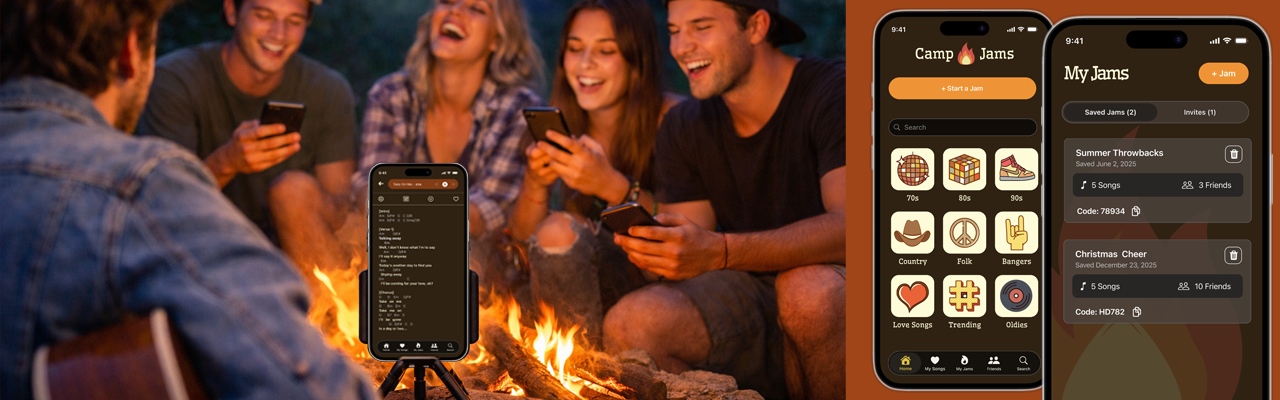
Friends spontaneously gather around a campfire to play music, but searching for lyrics and chords on phones disrupts the flow. Songs are often abandoned because the key isn’t right, and what should be a fun, social activity becomes frustrating work.
Solution
An iOS app that allows users to start live collaborative “Jams.” Lyrics and chords auto-scroll in real time, synchronized to the host’s performance, so everyone can play and sing together seamlessly.
Research
1. User Interviews
Conducted 8 semi-structured interviews with casual and experienced musicians.
Key Insights
- Manual scrolling interrupts performance.
- Finding accurate lyrics and chord sheets is frustrating and time-consuming.
- There’s no easy way to change the song key to accommodate everyone’s vocal range.
2. Contextual Inquiry
Observed 3 groups jamming in real-world settings.
Key Insights
- Frustration arises when searching for lyrics and chords mid-performance.
- Groups rely on a single device because different songs require different apps.
- Guitarists frequently stop playing to scroll, causing the group to go out of sync.
- There’s no way to save preferred song sheets for future sessions.
3. Competitive Analysis
Evaluated 2 music and collaboration apps - Ultimate Guitar and JamKazam - focusing on features, useability and performance.
Key Insights
Ultimate Guitar
- Optimize for solo practice, not group play.
- Manual scrolling is common and disruptive. Many different versions of songs (not always accurate).
JamKazam
- Joining group sessions requires excessive setup and account registration.
- Structured more for scheduled sessions with performers in different locations.
Research Outputs
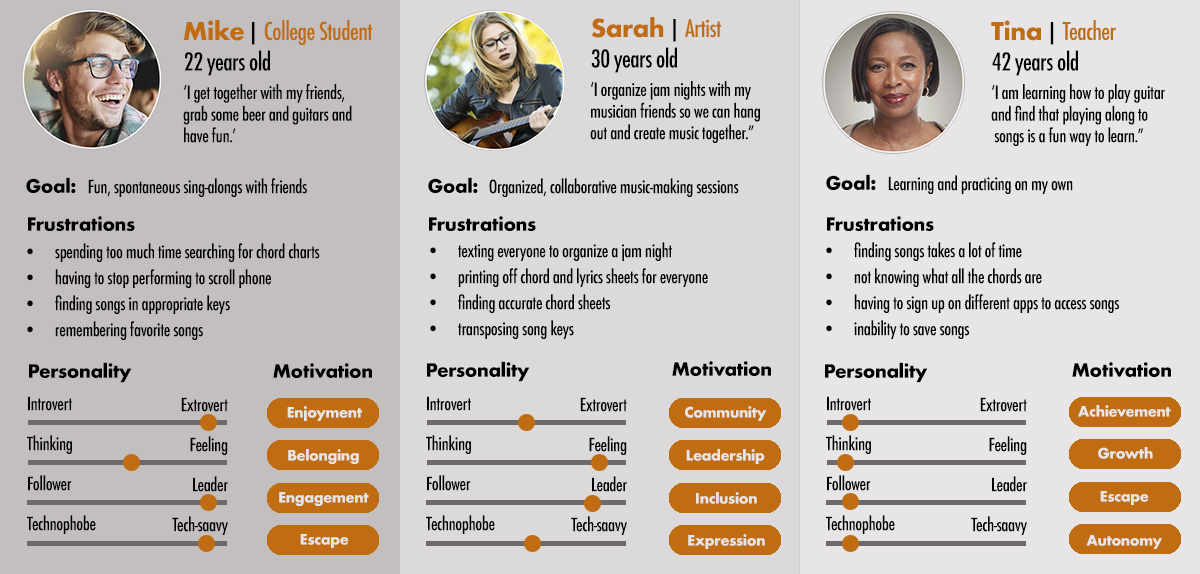
Personas
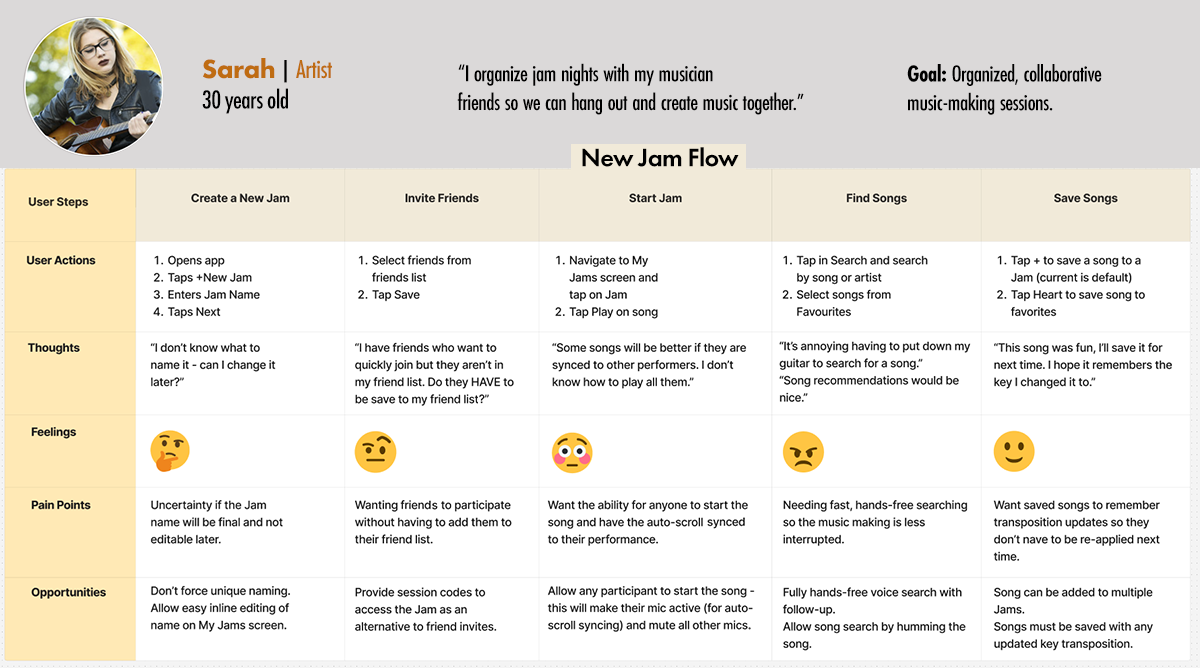
Journey Map
AI in the Research Process
AI was used as an augmentation tool to accelerate synthesis, explore alternatives, and validate assumptions - while all design decisions remained human-led.
Research Support
- Assisted with clustering interview notes during affinity mapping.
- Generated potential edge-case scenarios (e.g., late joiners, dropped sessions).
Designer Judgement
- All themes were reviewed and validated against raw notes and observations.
- Final insights were grounded in observed behavior, not AI output.
Design Principles
1. Protect the Flow:
Keep music-making uninterrupted.
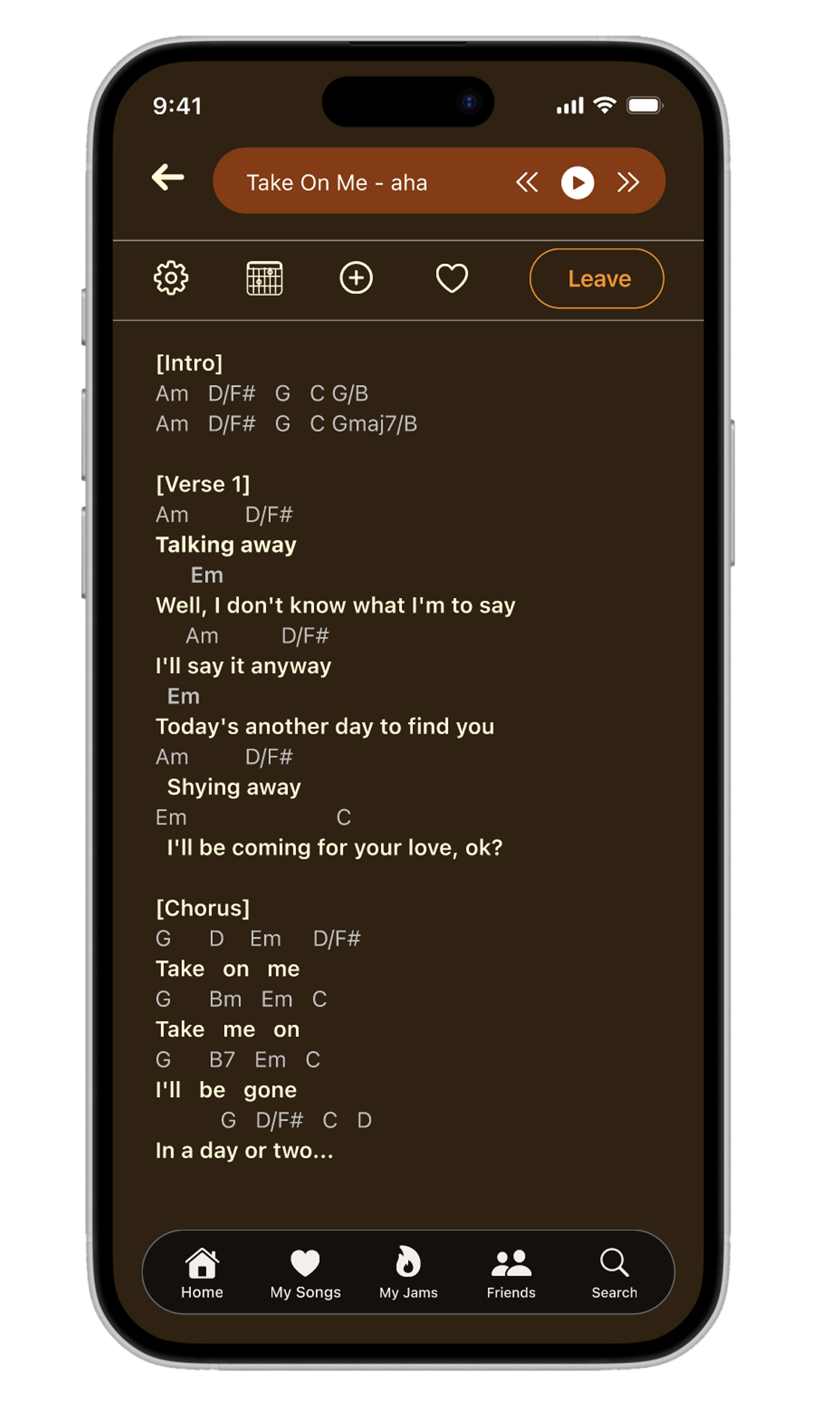
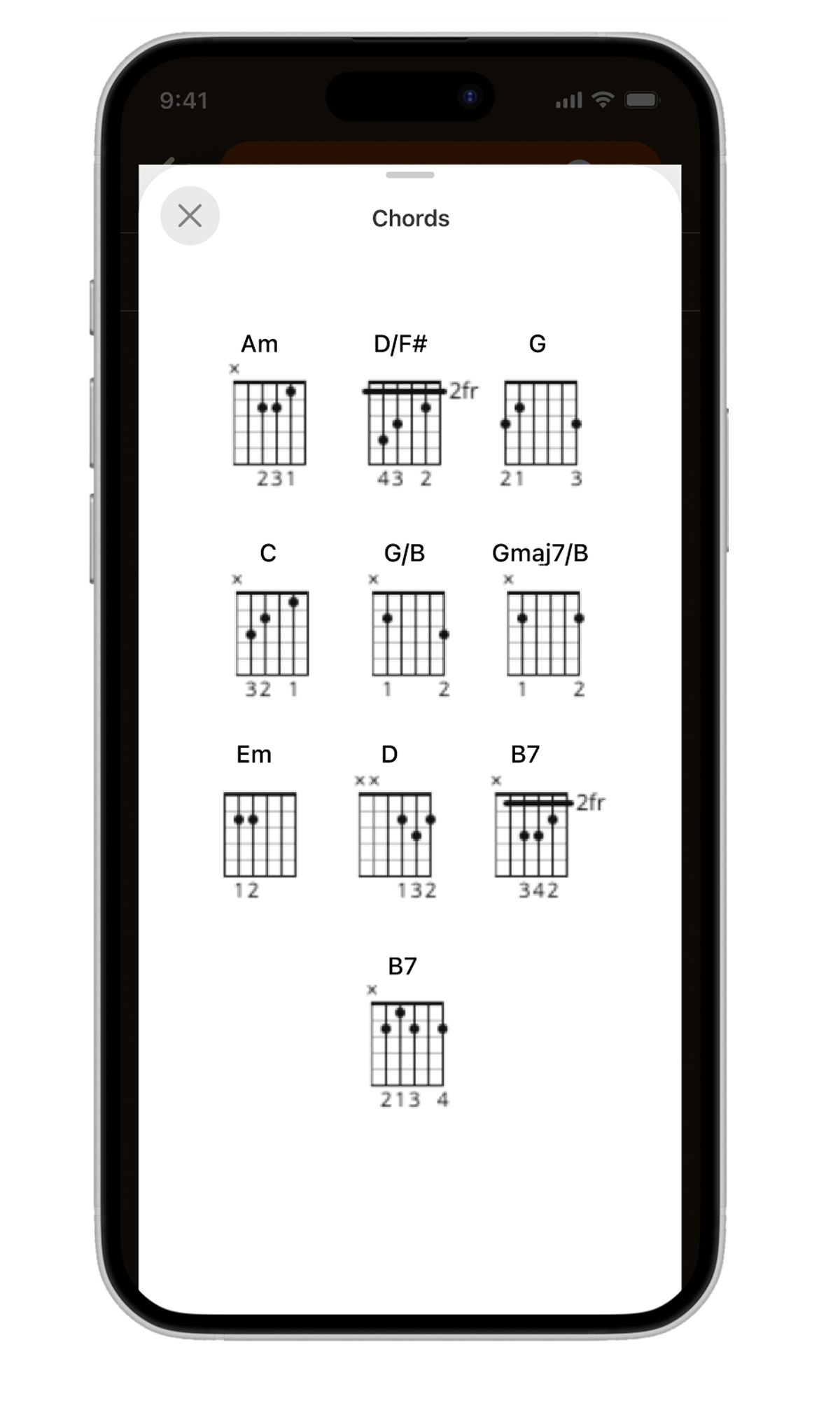
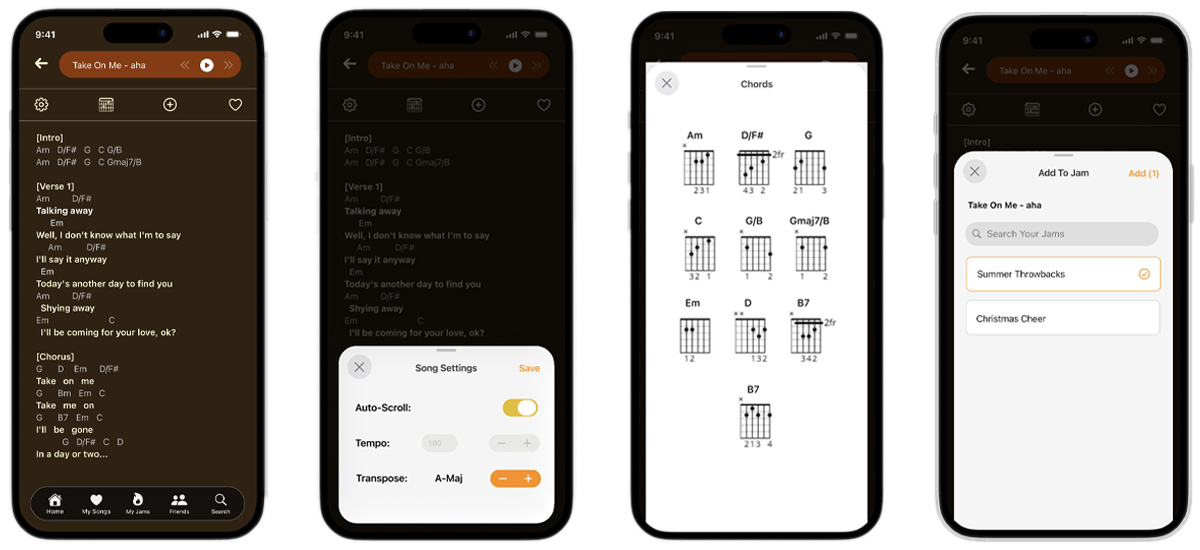
- Synchronized lyrics and chord progressions across all participants’ devices.
- Implemented auto-scrolling lyrics and chords to match the performer's tempo.
- Visually emphasized the current line and chord position for easy reference.
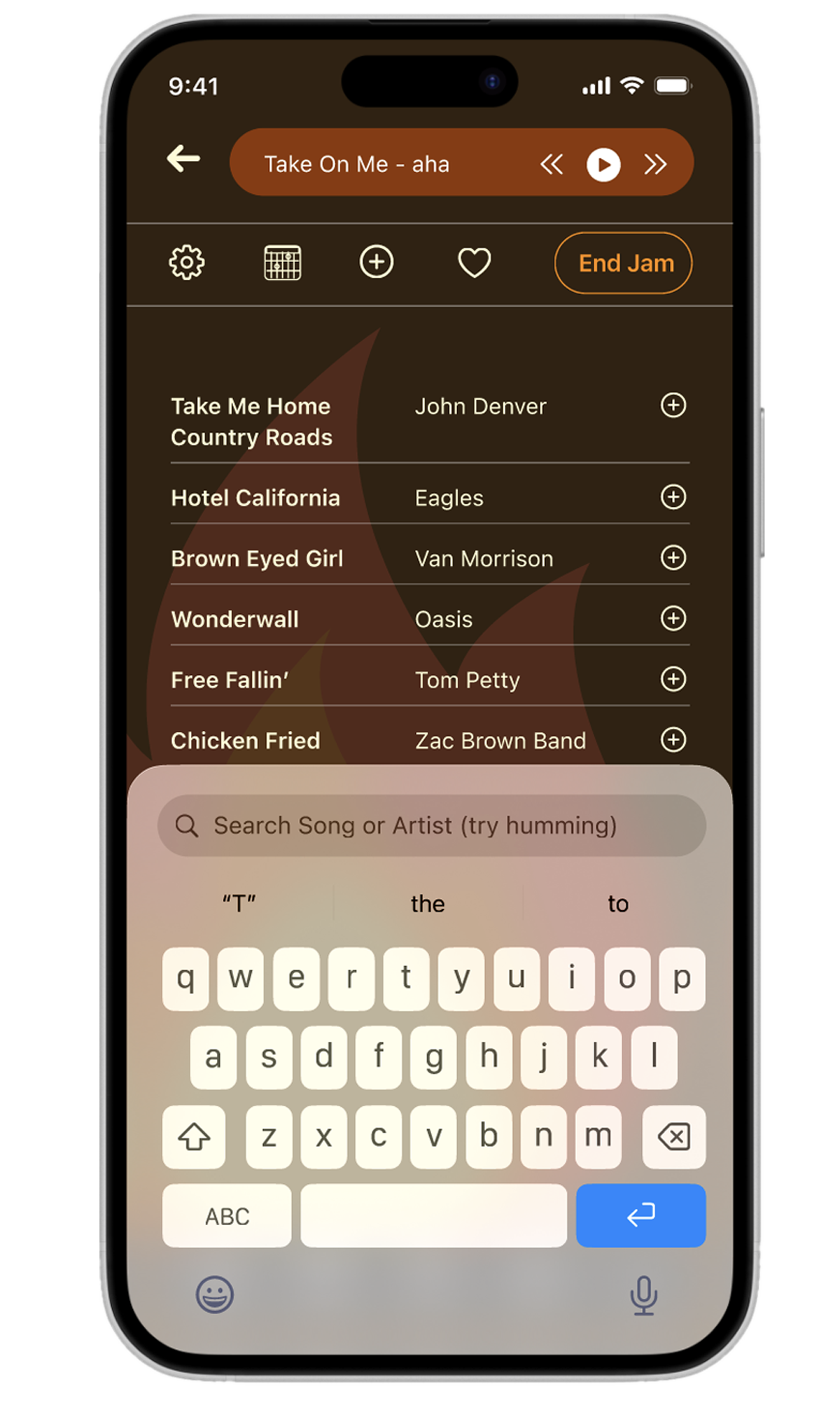
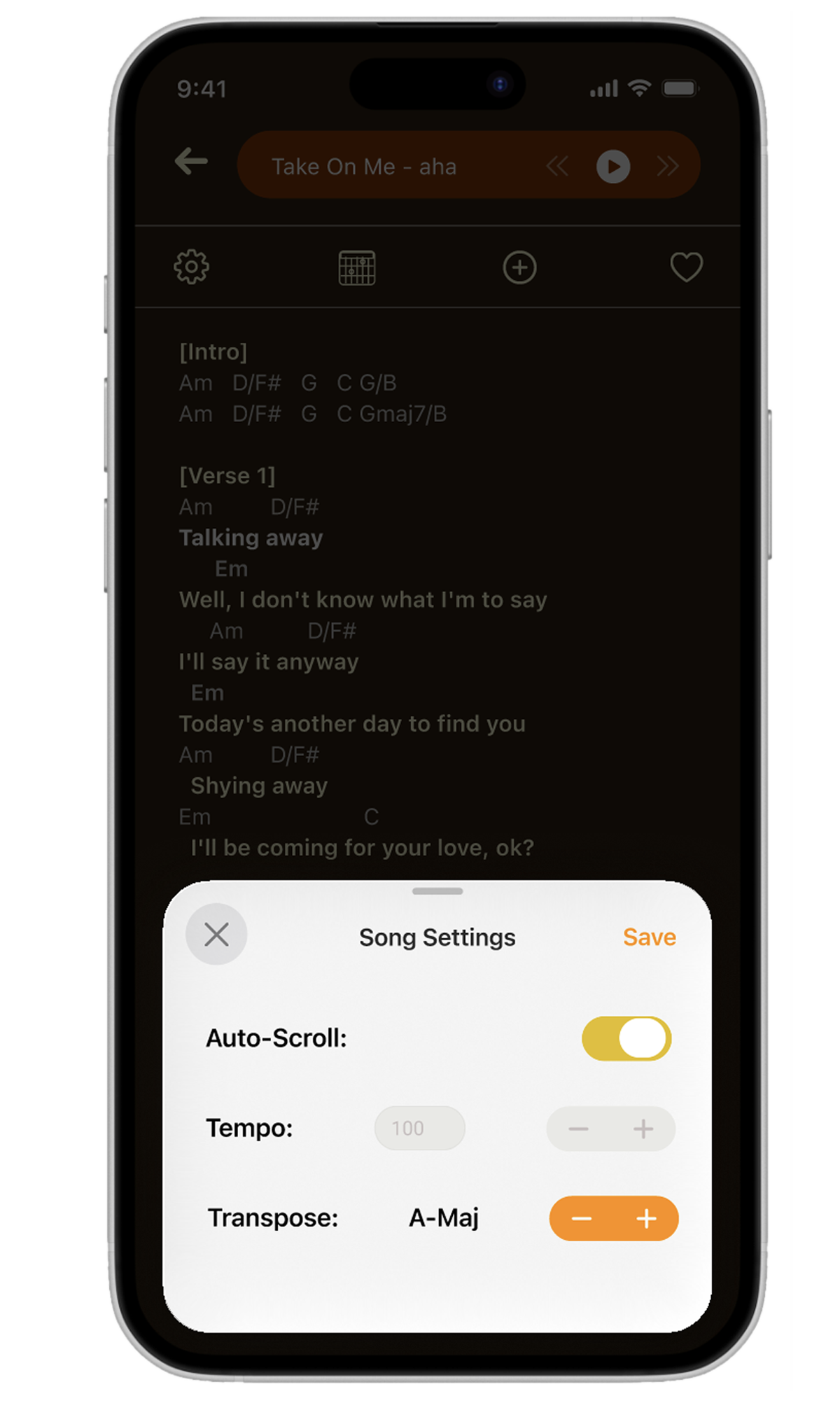
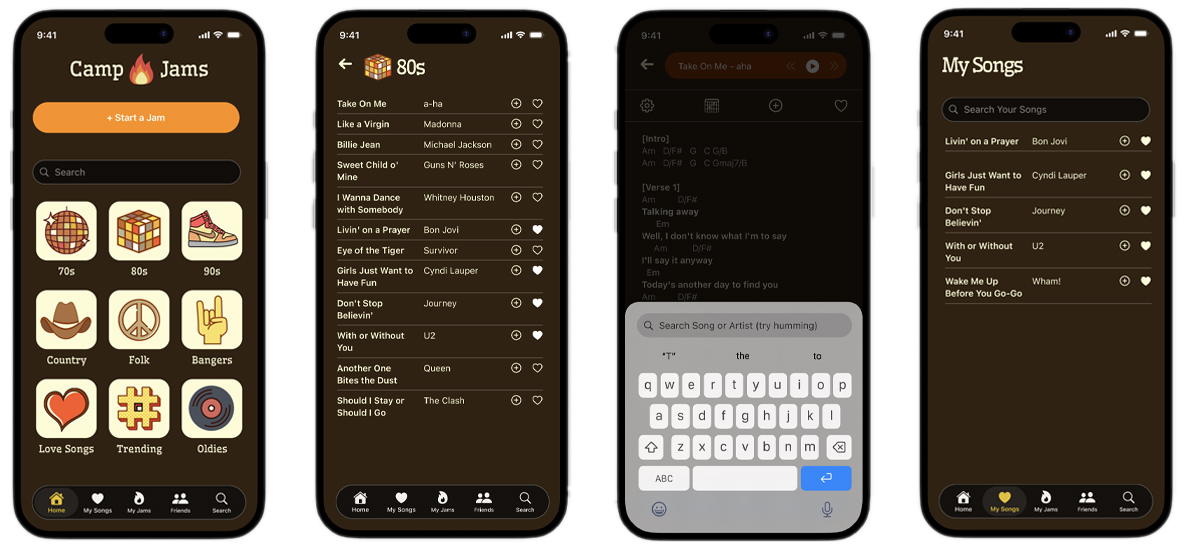
- Enabled hands-free conversational ai song search to find and select from results.
- Incorporated humming as a way to search for songs.
- Added a quick way to transpose the key.
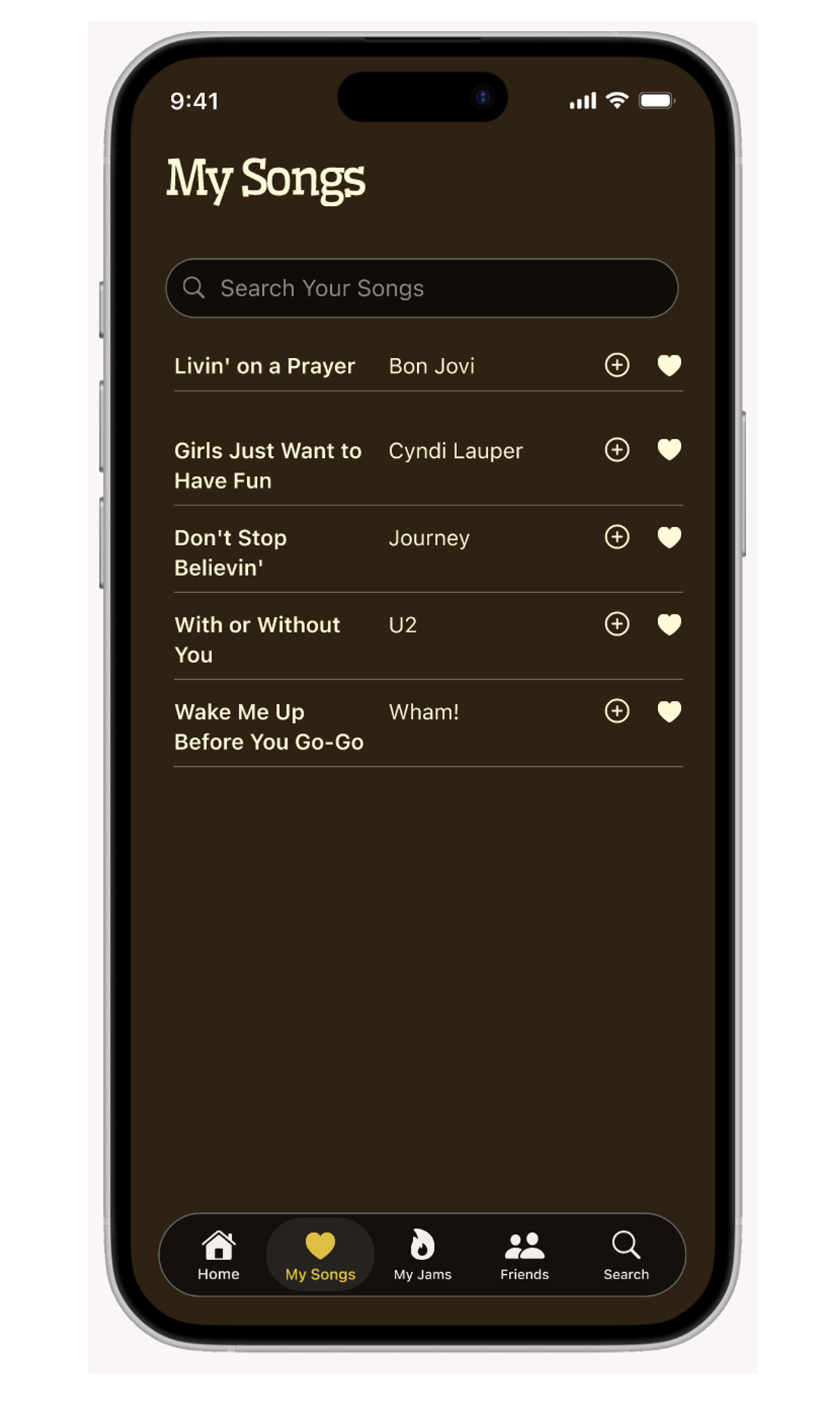
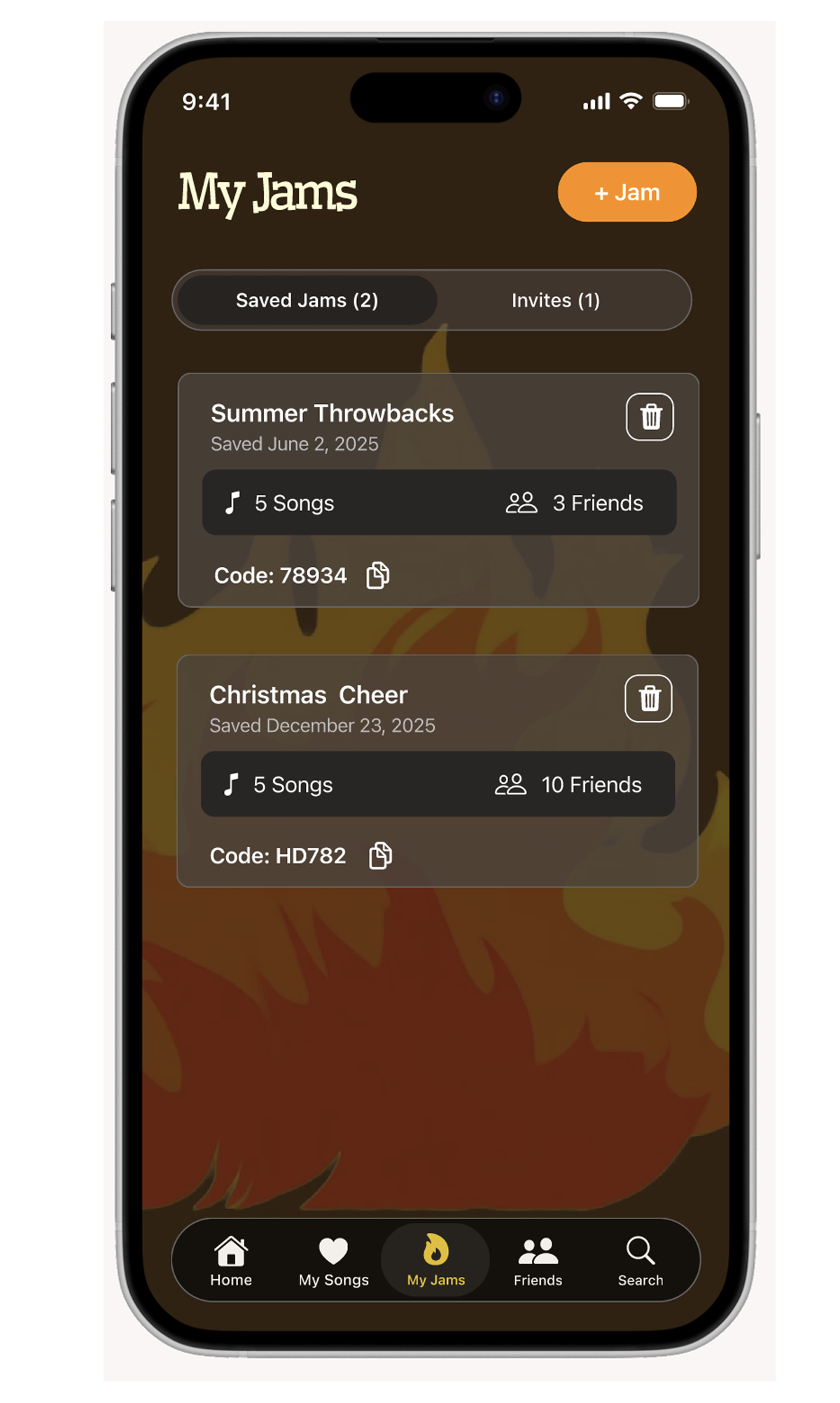
- Supported saving favorite songs and Jam sessions to reduce setup for future play.
2. Enable Instant Collaboration
Make joining a Jam effortless.
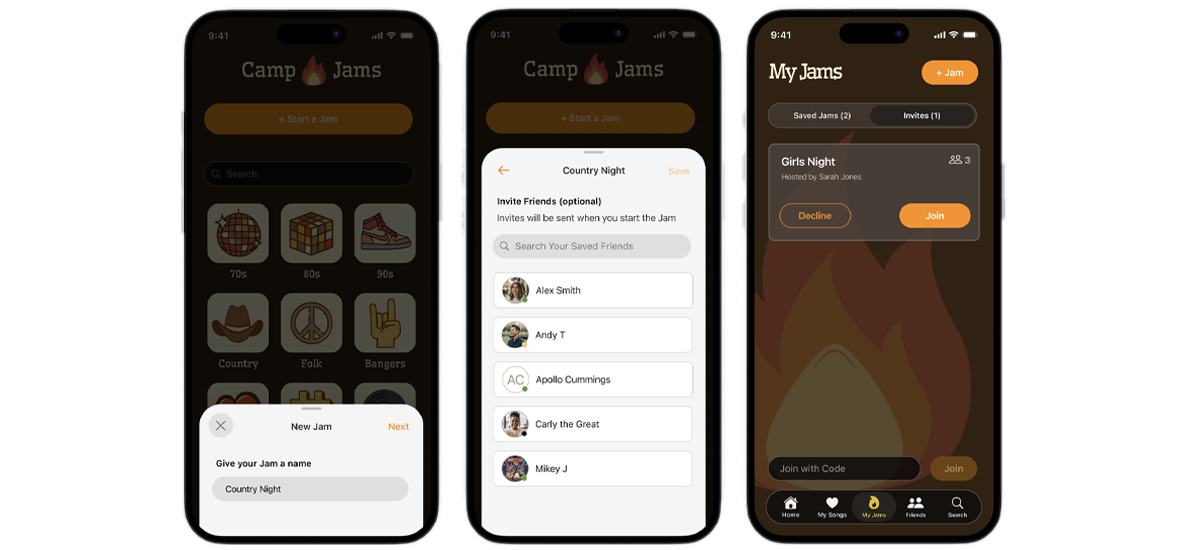
To support instant collaboration, I redesigned the entry and onboarding flow so users could join or start a Jam immediately. I identified friction points and opportunities to guide users toward their first meaningful experience, ensuring every step was clear, intuitive, and engaging.
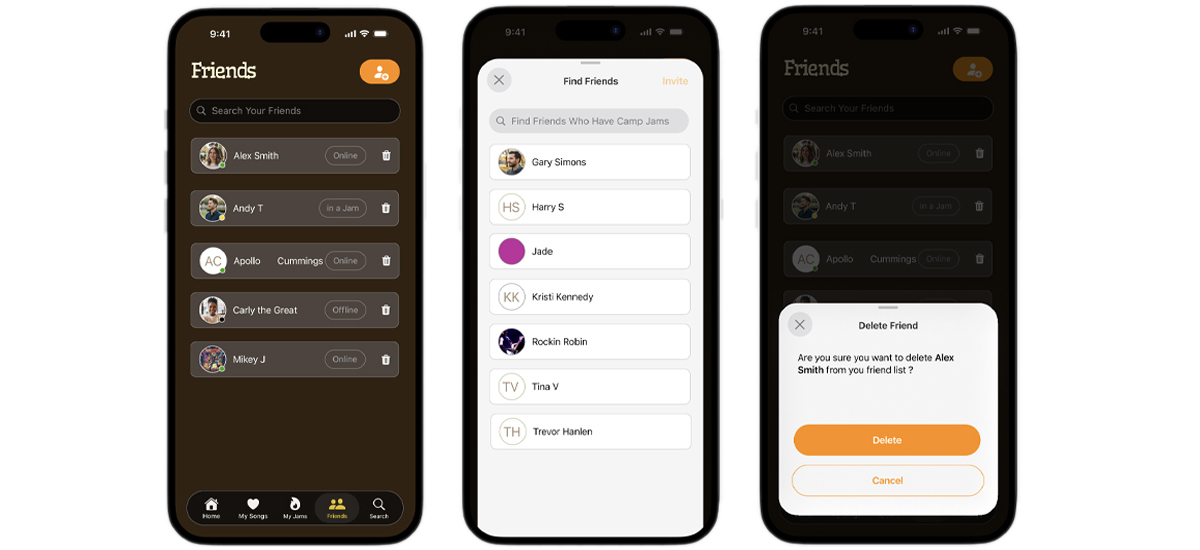
- Hosts can select participants from their friend list, who can join once the Jam starts.
- Participants can join via short session codes for immediate access.
Wireframes
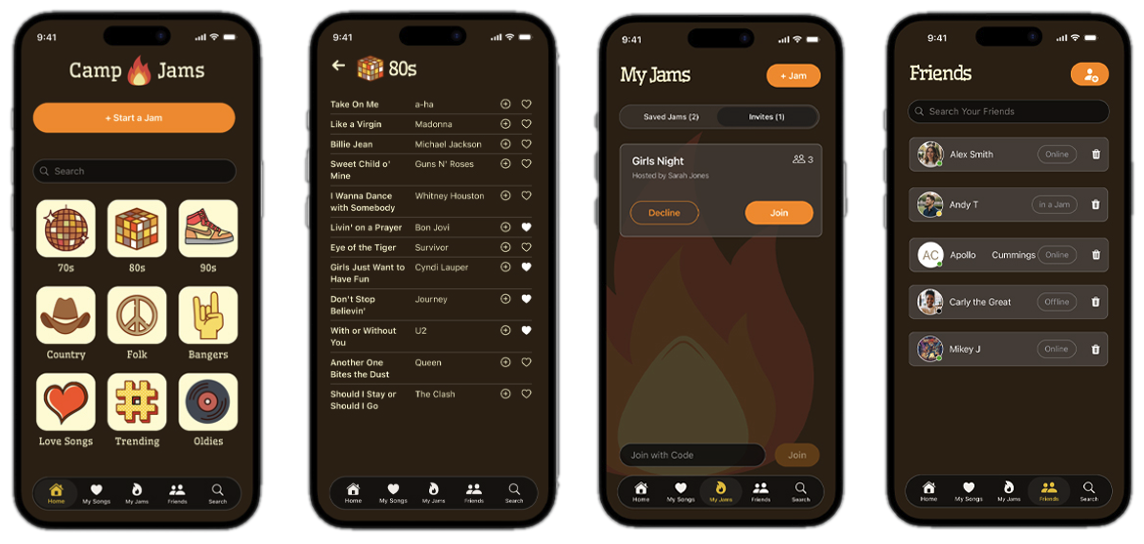
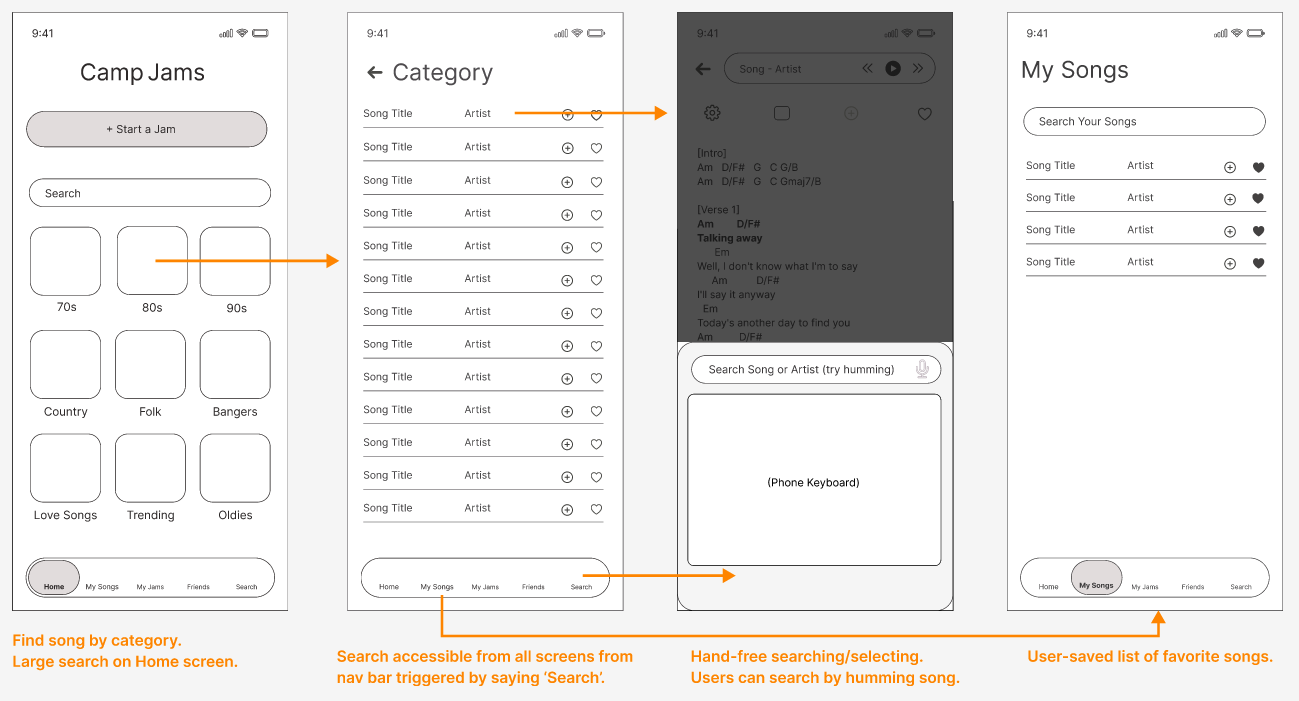
Low-fidelity wireframes were used to validate information architecture, core flows, reduce friction, and align the team on interaction patterns before investing in visual design.
Key flows explored and validated:
- Jam creation and participant entry (invites + session codes).
- Song discovery and selection.
- Active Jam experience (auto-scrolling, lyric highlighting, saving to Jams).
- Friend and participant management.
Wireframes helped uncover
- Ways to reduce steps required to start or join a Jam.
- Hands-free interactions that supported uninterrupted performance.
- Edge cases such as late joiners and host handoff during a session.
High Fidelity Designs
AI in the Design Process
Real user testing determined final design changes
Design Support
- Rapidly explored multiple navigation and Jam-creation flow variations.
Designer Judgment
- Concepts were evaluated against research-derived principles.
- Final IA and flows were refined manually.
- Reviewed wireframes for accessibility considerations.
- Flagged potential cognitive load issues during live play.
User Testing
Methods: Moderated, task-based testing
Key Findings and Design Impact
- Invites sent too early - Moved invites to trigger only when a Jam starts.
- Friction joining sessions - Introduced short session codes for quick entry.
- Hands-free needs during song search - Enabled song selection via voice commands from search results.
Design Learnings
Designing for live music required prioritizing emotional flow over granular control. Removing options during active Jams consistently produced clearer, more confident group experiences.